
When prayer feels empty
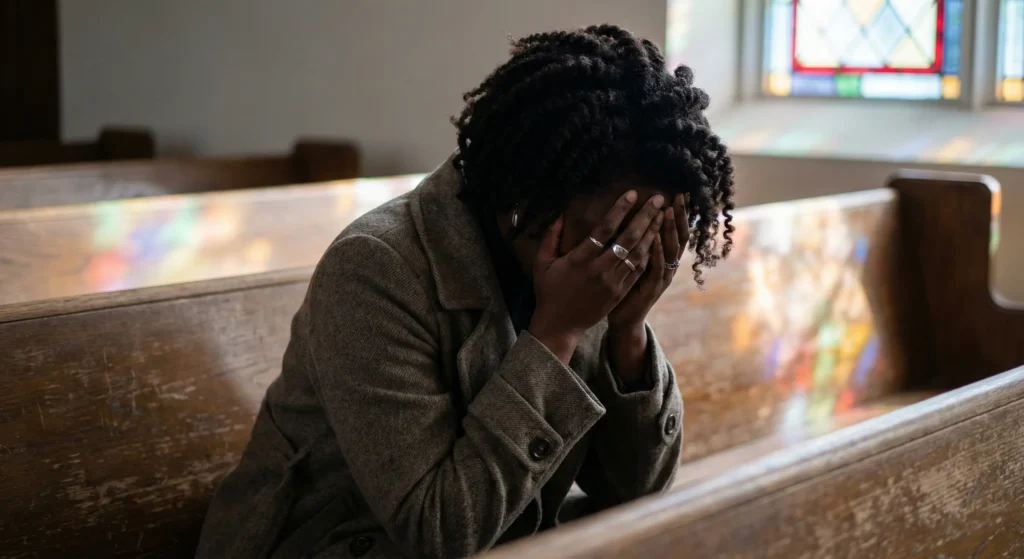
Finding grace when your spiritual lifeline feels like a disconnected wire.
For many in the Black community, faith is not just a belief system; it is a survival strategy. It is the rock we stand on when the world shakes. We are raised with the assurance that “prayer changes things” and that there is no burden too heavy for God to carry.
But what happens when prayer feels empty? What happens when you kneel for comfort, but find only silence, numbness, or a ceiling that feels like brass?
It is a profound and lonely ache. You may start to wonder whether you’ve lost your way, whether you’re being punished, or whether your faith was ever real. At The Mended Foundation, we offer a different truth: spiritual dryness doesn’t mean you’ve failed, and mental health struggles don’t make you spiritually flawed.
The guilt of the “Spiritual Stronghold”
When you grow up in a culture that prescribes prayer as the primary cure for everything, finding yourself unable to connect can bring immense shame. You might have friends or elders telling you to “just pray harder,” “have more faith,” or “cast down those thoughts.”
While often well-meaning, this advice can be damaging when you are in the thick of a mental health crisis. It suggests that if you are suffering, you simply aren’t praying enough. This is false. You can love God deeply and still struggle with depression, anxiety, or trauma. When prayer feels empty, it is often because your emotional reserves are depleted, not because your spirit is broken.
Depression numbs the senses
Mental health struggles, particularly depression, act like a thick fog. They dampen your ability to feel joy, hope, connection, and yes!, even God. If you cannot feel the love of your partner or the warmth of the sun, it is not surprising that you cannot feel the presence of the Divine.
It’s a symptom, not a sin: The numbness is a biological and psychological response to pain or chemical imbalance. It is not a judgment on your soul.
God is not fragile: Your silence, your anger, and your questions do not intimidate the Divine.
Honesty as a form of worship
If the words won’t come, or if the traditional ways of praying feel hollow, you do not have to force them. There is a rich tradition of “lament”, of crying out in pain, confusion, and even accusation. There is holiness in simply sitting in your truth and saying, “I am hurting, and I don’t know where you are.”
Sometimes, the most honest prayer you can offer is your tears or your exhausted silence.
Rest as a spiritual act
When your mind is too loud or too heavy to focus on prayer, try shifting your perspective on what connection looks like.
Let others pray for you: When you cannot carry your own faith, let your community carry it for you. This is what it means to be the body of believers.
Find God in the physical: walking in nature, savoring a warm meal, or sinking into a deep sleep can all become acts of worship. Caring for the vessel (your body) is honoring the Creator.
You are held, even in the silence
If you are currently in a season when prayer feels empty, know that you do not have to walk through the valley alone. You are not abandoned, and this silence will not last forever.
If you need someone who understands where faith and mental health meet—or resources that help you breathe again:
Visit our Healing Room for more tools, reflections, and resources to support your spiritual and mental wellbeing.
Go to Get Support for crisis contacts, community services, and mental health help tailored to the Black community in the UK.
Together, we can mend the spaces where faith and feeling have drifted apart. You are loved, even in the quiet.