
Is Social Media Damaging Black Men’s Self-Worth?
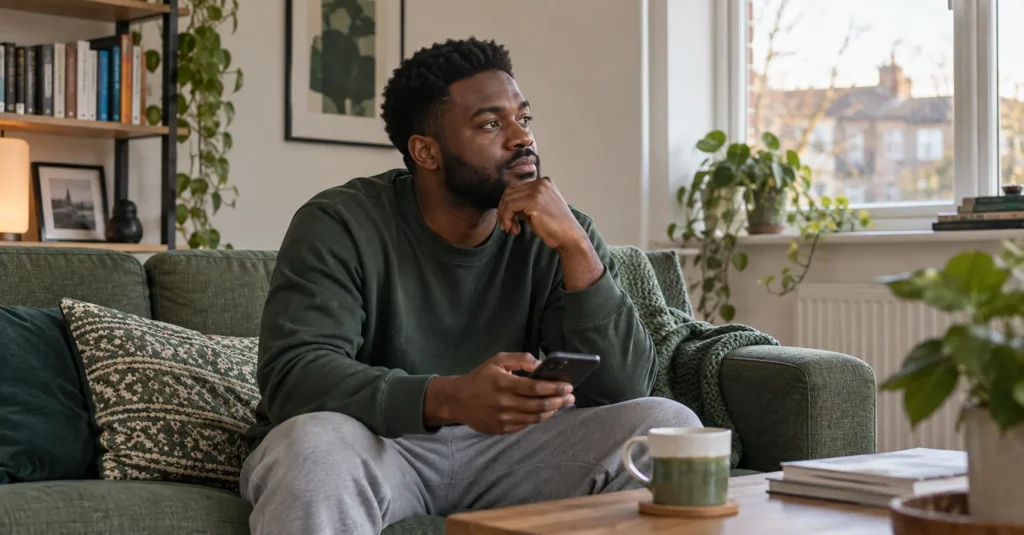
Social media can bring humour, information, friendship and community into your day. It can also fill a quiet moment with other people’s achievements, bodies, relationships and opinions.
The relationship between social media and Black men’s self-worth is not simple. A platform does not decide your value, but polished success, narrow ideas of masculinity and racist commentary can leave you wondering whether you measure up. The useful question is not simply, “Is social media bad?” It is, “What happens to the way I see myself when I use it?”
The Short Answer: It Depends On What The Feed Is Doing To You
Social media is not automatically damaging. The effect can depend on who you follow, why you open an app, how long you stay and how you feel afterwards. A feed that helps you learn, laugh or keep in touch may support you. One that repeatedly leaves you feeling behind, unattractive or invisible deserves closer attention.
This matters because social media is woven into everyday life. Ofcom research published in April 2026 found that 89% of adult internet users in the UK used at least one social media platform. Only 36% of social media users said the platforms were good for their mental health, down from 42% in the previous study. Ofcom notes that changes in its method mean the year-to-year trend should be treated as indicative.
Research also suggests that the kind of content matters. A meta-analysis of experimental studies found that exposure to people who appeared better off on social media had negative effects on self-esteem and wellbeing. That does not mean every comparison causes harm. It does show why a carefully staged feed can begin to feel like an unfair scoreboard.
Why Social Media Can Hit Black Men’s Self-Worth Differently
Every man carries his own history. Still, some pressures meet Black men online in ways that deserve to be named.
The Pressure To Look Successful
A few minutes of scrolling can make it seem as though everyone else is earning more, travelling further or living without uncertainty. Missing from the frame are the help, timing, disappointment and ordinary work behind the post.
For a man who already feels expected to provide, lead or remain in control, this stream of success can sharpen the thought, “I should be further ahead.” Ambition is not the problem. The problem begins when someone else’s edited highlight becomes the measure of your whole life.
Narrow Ideas Of Black Masculinity
Online spaces often reward extremes. A man may be told that he is not wealthy, dominant or emotionally detached enough. Vulnerability can be mocked while anger becomes the only accepted difficult emotion. Our article on giving Black men permission to feel explores a wider version of strength—one that makes room for honesty, rest and support.
Racism, Colourism And Representation
Social media can offer affirming representation, but it can also bring racist stereotypes, colourism and hostile commentary into a private space. A viral joke or comment section may reduce Black men to a threat, body type or narrow performance of masculinity. That prejudice does not define your worth. You may leave the conversation, block an account or protect yourself without explaining why.
When Scrolling Starts To Measure Your Value
Self-worth is deeper than confidence on a good day. It is the sense that your life has value even when you are learning, resting, struggling or unseen. The NHS describes self-esteem as the opinion we have of ourselves and notes that long-term low self-esteem can affect mental health and daily life.
Social media may be putting pressure on your self-worth if you regularly notice that:
- your mood drops after you scroll;
- likes, views or replies decide whether something you made feels worthwhile;
- another man’s body, income or relationship makes your own life feel smaller;
- you delete honest posts because they do not fit the image you think you must maintain;
- you feel anxious about falling behind trends, conversations or opportunities;
- sleep, work or real-life relationships are being pushed aside by time online.
One sign on its own does not prove that social media is damaging you. Patterns matter. Pay attention to what keeps happening, which accounts are involved and what you say to yourself afterwards.
How To Protect Your Self-Worth Online
You do not need to disappear from every platform to regain control. Small, deliberate changes can alter the relationship you have with your feed.
Name The Comparison
Pause when a post changes your mood. Ask: what am I comparing—my body, money, career, relationship, popularity or confidence? Then ask what information is missing from the post.
Imagine opening an app after a difficult day and seeing an old classmate announce a promotion. The first thought might be, “I have wasted my time.” A fairer response is, “His news is one moment from his life, not the whole story of mine.” This does not deny disappointment; it stops one post becoming a verdict.
Reshape What Reaches You
Mute, unfollow or block accounts that repeatedly leave you feeling diminished. Follow people whose content offers useful knowledge, honest process, cultural connection, humour or a fuller picture of life. A familiar account does not have an automatic right to your attention.
Be careful with content that makes shame feel like motivation. Advice built on “real men always” may attract clicks, but it leaves little room for different lives or starting points.
Create Boundaries You Can Keep
Choose one boundary that fits your routine. You might keep your phone away from the bed, turn off non-essential notifications, remove an app from the home screen or set a time limit for the platform that pulls you in most.
The aim is not to achieve a perfect digital detox. It is to create enough space to notice your own thoughts before the feed supplies them for you.
Build Evidence Of Worth Offline
Do something that has value even when nobody sees it. Cook for yourself. Learn a skill slowly. Keep a promise. Move your body in a way that feels supportive. Spend time with someone who lets you be more than your achievements.
Write down qualities an app cannot count: how you listen, the care you give, the boundaries you are learning and the values you return to. The NHS also recommends identifying negative beliefs and writing evidence that challenges them. This can move your attention from a public score to a fuller view of yourself.
Social Media Can Also Be A Place Of Connection
A healthier approach is not based on fear. Social media can help Black men find conversations that are missing elsewhere. It can introduce you to mental health language, creative work, cultural history, business knowledge, fatherhood communities and men speaking honestly about their lives.
How you participate matters. Passive scrolling can leave the loudest messages in control. Choose communities with care, speak to people directly and turn useful information into offline action.
Your feed should not have the final word on who you are. It is a tool, shaped by commercial platforms, algorithms and the choices you make within them. You can take what supports you and step back from what does not.
When You Need More Than A Change To Your Feed
Sometimes reducing screen time is not enough. If harsh self-criticism is persistent, or your sleep, relationships, work or daily life are being affected, consider talking to someone you trust, your GP or a qualified mental health professional.
Support should see more than a symptom. CQC research on Black men’s experiences of mental health services emphasises care that treats Black men as whole people, listens with respect and understands that individual cultures and circumstances differ. Our guide to Black Men’s Mental Health Support can help you think through culturally informed routes to care.
Put Your Worth Back In Your Own Hands
You do not have to earn your value through attention, appearance, income or constant performance. Your worth remains present on an ordinary day, when the post gets little response and when somebody else appears to be moving faster.
Start with one honest check-in: “How do I usually feel after spending time on this app?” Let the answer guide one change this week. Curate what you see, protect a quiet part of your day and invest in relationships where you do not have to perform.
Explore more articles for Black men for reflections grounded in the experiences of Black men. Visit our Healing Room for more articles and practical guidance for your wellbeing. If the pressure is becoming difficult to carry alone, visit our Get Support page for current routes to help.