
Who Gets to Decide If You Are Black Enough?
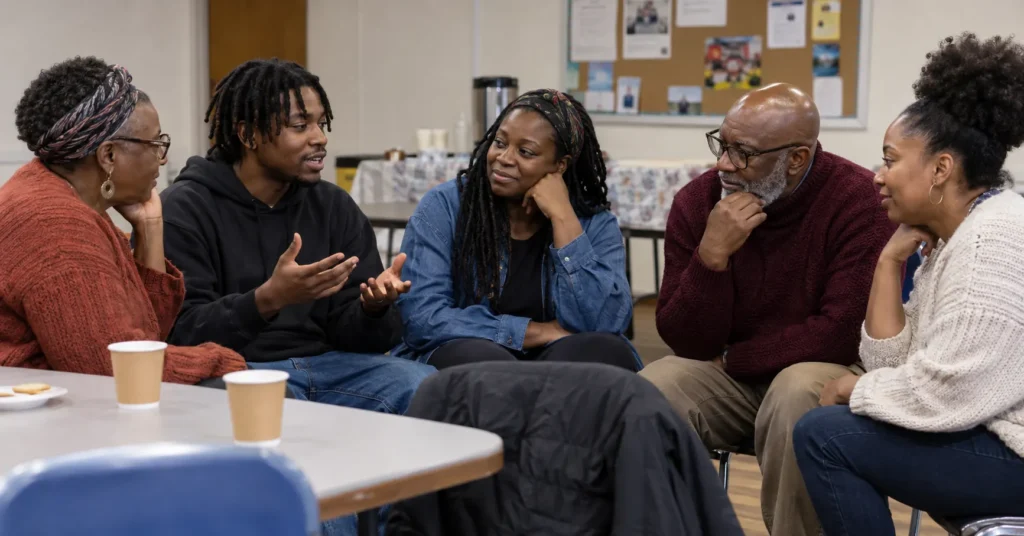
Maybe someone has told you that you do not sound Black. Perhaps your music, friends, education, partner, politics or the way you wear your hair has become evidence in a case you never agreed to defend. For some people, the question comes through comments about lighter skin, mixed heritage, being raised away from Black relatives or not knowing a particular language.
When your Black identity is questioned, the remark can follow you long after the conversation ends. You may replay what you said, wonder whether you missed an unwritten rule or feel pressure to display your Blackness in a way other people will recognise.
Racial gatekeeping turns belonging into a test. Yet Black identity has never had one accent, family story, skin tone or approved way of living. Your relationship with your identity may change as you learn more about yourself, but it does not belong to a panel of judges.
What Racial Gatekeeping Can Look Like
Racial gatekeeping happens when somebody claims the authority to decide who counts as a legitimate member of a racial or cultural group. Sometimes it is blunt: “You are not really Black.” At other times, it arrives disguised as a joke or a quiz.
You may be asked to prove where your parents were born, defend why you cannot cook a particular dish or explain why you speak with your regional British accent. Someone may compare your skin tone or hair texture with theirs. The test can change each time you answer, which tells you something about the test itself: it was never designed for you to pass.
These comments can come from outside Black communities or from within them. The source changes the sting, but not your right to take the effect seriously. Being questioned by people whose acceptance matters to you can feel especially isolating.
No One Person Owns the Definition of Blackness
Black is a shared racial identity with many histories inside it. Black African, Black Caribbean and Black British experiences overlap in some places and differ sharply in others. Nationality, migration, language, faith, class, gender and region also shape how people understand themselves.
That variety is not a weakness in Black identity. It is part of the truth.
The Office for National Statistics describes ethnic group and national identity as self-identification measures, meaning they reflect how people define themselves. Its guidance also recognises that ethnicity can involve ancestry, culture, identity, language and physical appearance, and that the available categories cannot capture every person’s experience.
Official forms cannot settle every personal question about belonging. Still, the principle matters: an interviewer should not substitute their judgement for yours, and neither should a stranger, colleague or relative appoint themselves as the final authority on your identity.
Why “Black Enough” Tests Hurt
Belonging usually grows through relationship, memory and recognition. Racial gatekeeping replaces that human process with inspection. Instead of being known, you are measured.
Repeated comments may leave you monitoring your speech, clothes or interests before entering a room. You might avoid conversations about heritage because you fear getting something wrong, or overstate parts of yourself to prevent another challenge. Some people withdraw from Black spaces even though they still long for connection.
The pressure can work in opposite directions. One group may say you are too Black; another says you are not Black enough. Trying to satisfy both demands can turn everyday choices into performances.
Different Paths Into Black Identity Still Count
Some people grow up surrounded by relatives who share their heritage. Others begin learning about part of their background later in life. Neither story fits everybody.
Mixed Heritage and Lighter Skin
People of mixed heritage may identify as Black, mixed or use more than one description, depending on what feels honest to them. Having lighter skin can affect how someone moves through the world and may bring forms of privilege that darker-skinned people do not receive. Acknowledging colourism does not require erasing a person’s Black ancestry or dictating their identity.
You can hold both truths: your experience belongs to you, and it may differ from that of someone with darker skin.
Adoption, Migration and Family Separation
Adoption, care experience, migration or family separation may limit access to language, food, names and community history. Not knowing something is not the same as rejecting it. You are allowed to learn without pretending you already know.
Curiosity can become a way home. It should not become another exam.
Accent, Education and Personal Interests
No accent proves Blackness. Neither do certain clothes, music, qualifications, neighbourhoods or political views. Black people are allowed to be bookish, athletic, quiet, outspoken, religious, non-religious, queer, traditional, experimental or difficult to summarise.
Stereotypes do not become harmless because another Black person repeats them.
Gatekeeping Is Not the Same as Accountability
There is a difference between policing someone’s identity and questioning something they have said or done. If a person points out anti-Black language, colourism or a refusal to recognise privilege, that conversation may deserve attention. “This comment caused harm” is not the same claim as “you are not Black enough.”
Identity does not place anyone beyond accountability. At the same time, accountability should address the behaviour rather than threaten a person with racial expulsion.
Ask yourself what the conversation is really about. Is somebody naming a specific action and explaining its effect, or are they using your appearance, upbringing or interests to deny your belonging? The first may offer something to consider. The second asks you to surrender your identity to their rules.
How to Respond When Your Black Identity Is Questioned
You do not owe every person a detailed family history. Before responding, decide whether the relationship is safe enough for honesty and whether the other person seems willing to listen.
Your answer can be brief:
- “My Black identity is not something I need you to approve.”
- “There is more than one way to be Black, and my experience does not have to match yours.”
- “If you want to discuss something I said, name it directly. Do not use my identity as the argument.”
- “I am still learning parts of my family history. That does not make me available for jokes about whether I belong.”
You can also leave the conversation. Refusing an identity test is not an admission that the accusation was true.
With somebody you trust, a longer discussion may help. Tell them which comment hurt, what assumption sat underneath it and what you need to change. Their response will show whether repair is possible.
Building Belonging Without Auditioning for It
Look for people who make room for difference within Black life. That might be relatives, friends, a cultural group, a faith community, a reading circle or an online space with thoughtful moderation. The right setting will not demand identical experiences before allowing connection.
Learning can strengthen your sense of self when it comes from genuine interest rather than fear. You might ask an older relative about family history, read writers connected to your heritage, attend a community event or learn a language that matters to you. None of this earns Blackness. It gives you more ways to know your own story.
Our article on the complexities of a multi-racial identity may also help if several racial or cultural backgrounds form part of how you understand yourself.
Caring for Yourself After Racial Gatekeeping
After an upsetting exchange, give yourself a little distance before deciding what it means. Write down the words that were used and your reaction to them. Separating the comment from your identity can help: somebody questioned you; their question did not rewrite your ancestry or lived experience.
Notice which relationships repeatedly make you shrink, explain or perform. You may need firmer limits with those people. Spend more time where you can speak naturally and remain open to learning without being humiliated for what you do not know.
If these experiences are affecting your mood, confidence or daily life, talking with a counsellor who understands racial and cultural identity may offer useful support. You can ask a prospective therapist how they work with race, mixed heritage, colourism and belonging before deciding whether they feel right for you.
Please visit our Healing Room for more reflections and resources to support your daily wellbeing as you explore identity and belonging.
You can also visit our Get Support page for UK crisis contacts and routes to mental health support if the weight of these experiences becomes hard to carry alone.
Your Blackness Is Not an Audition
Nobody else can know every part of your history, family, body and inner life. Community matters, and honest conversations within Black communities matter too. Neither requires turning Blackness into a narrow role that only some people can perform correctly.
You are allowed to name your identity, keep learning and seek relationships where your full story has room to breathe. Together, we can build forms of belonging that welcome difference without asking anyone to disappear.